The Story of Relic
By Imran5 min read
On this page
Every startup has an origin story. Ours involves a Formula 1 race, several handyman stores around Sarajevo, and a mentor closing a laptop on us mid-sentence.
Let me explain.
It started with a weekend (and a race)
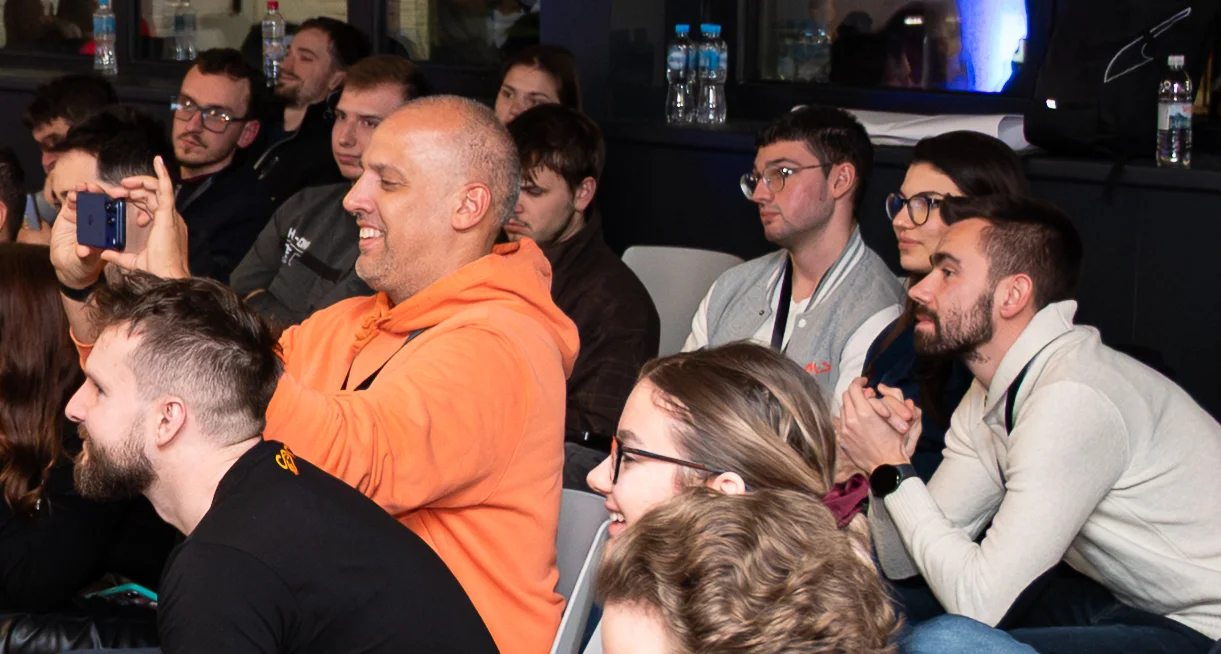
Our story begins at Techstars Startup Weekend in Sarajevo: 54 hours of pitching, building, and drinking far more coffee than the human body was designed to handle.
Sara and I were on one team. Haris was on another. On paper, that made us competitors. In practice, we kept running into each other in the hallways, swapping thoughts on each other’s ideas, and slowly realizing we spoke the same language.
The real turning point wasn’t a pitch or a workshop, though. It was Formula 1. At some point during the event, a race came on, and the three of us drifted toward the screen. By the final laps, team boundaries had dissolved and we were just a group of people with strong opinions about pit stop strategy.
That’s also how we met Bojan, the event’s organizer and mentor. He noticed the little F1 fan club forming in the corner and came over with an F1-related idea he thought we could work on together. We didn’t know it yet, but that conversation was the start of something much bigger.
Lesson one: never underestimate the networking power of a Grand Prix.
Going our separate ways
When the weekend ended, we did what most Startup Weekend participants do: we went home, slept for about fourteen hours, and then went back to our own projects.
Each of us spent the following months building our own startups. Let’s just say those ideas didn’t really work out, and leave it at that. They taught us plenty, mostly about what not to do, which turned out to be very useful later.
Round two: Aperio
About six months later, in May, Techstars Startup Weekend came back to Sarajevo, this time with a proptech theme. Our approach was different this time. We weren’t strangers who happened to bump into each other. We planned to work together from the start.
Our idea was Aperio, an app that let people unlock doors with their phone instead of keys. But the most important thing we discovered that weekend wasn’t a product. It was how well the three of us worked together. We clicked. Decisions were fast, disagreements were productive, and nobody had to be convinced to stay up late.
Our favorite memory is from validation. We needed to talk to real people about locks and keys, and after some brainstorming we found the perfect hunting ground: handyman stores. So we split up, each walked into a different store around Sarajevo, and started interviewing customers between the screws and power drills.
Nothing builds team trust quite like sending your future co-founders into separate hardware stores to ask strangers about their front doors.
From a weekend project to the real thing
Usually, when the weekend ends, the momentum ends with it. Ours didn’t.
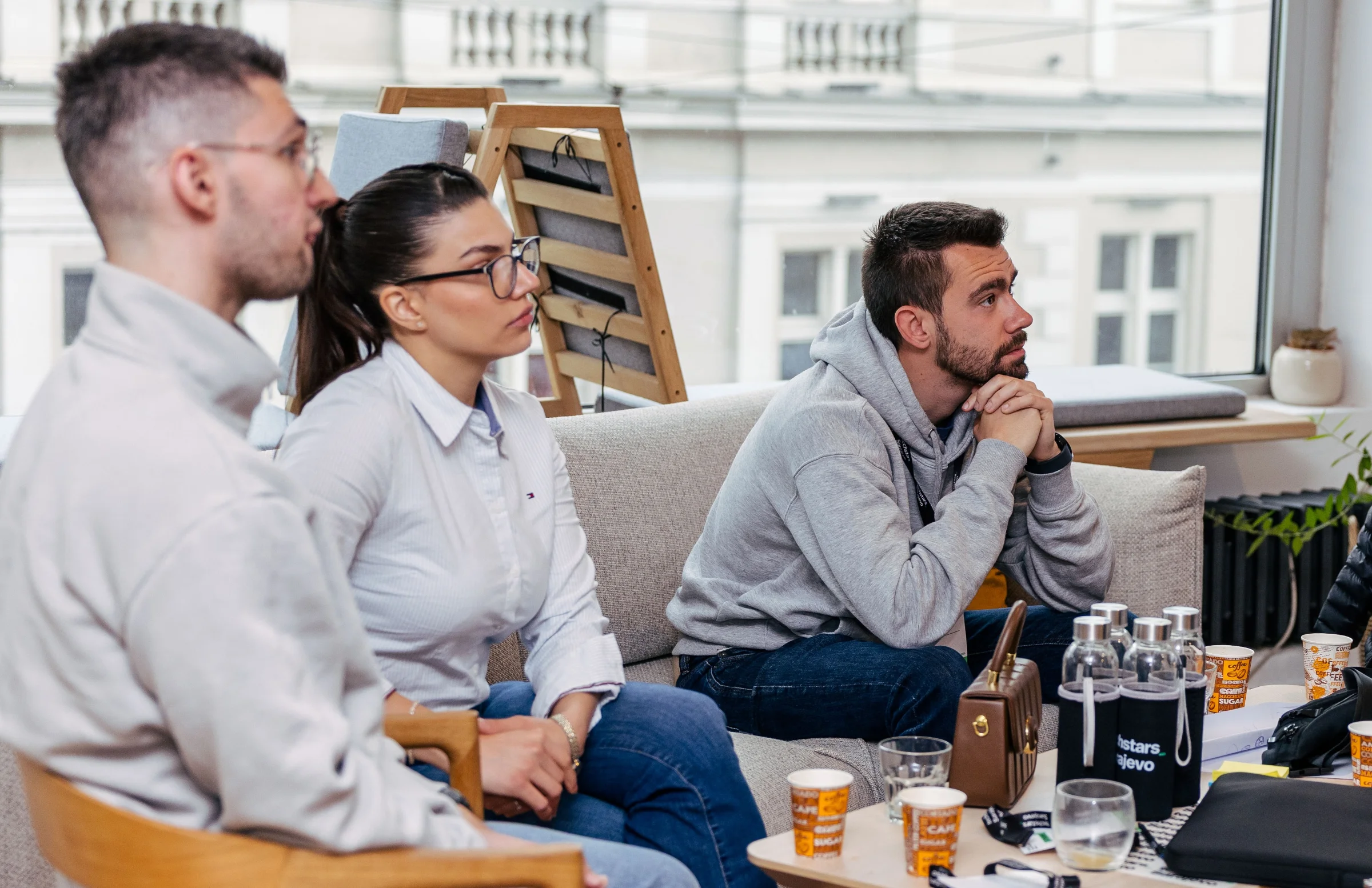
About a week after the event, we moved into a coworking space in Sarajevo, which also happened to be where Bojan worked. Having a mentor a few desks away turned out to be a huge advantage. It also meant there was no hiding from honest feedback, but more on that shortly.
The pivot
We’ll be honest with you, the way we eventually had to be with ourselves: Aperio was a bad idea for us. It sat well outside our expertise, and the more we dug in, the clearer it became that we weren’t the right team to build it.
While we were wrestling with that, we kept coming back to a problem all three of us had. We were constantly saving things like articles, PDFs, links, screenshots, and notes, and we could never find them when we actually needed them. More than once, we ended up redoing research we’d already done because the original was buried somewhere in a forgotten tab or folder.
Bojan had the exact same problem, and he suggested we explore it. That’s how our first pivot happened: from keyless locks to a “second brain” for everything you save.
Crying with Bojan
A “second brain” is a big, exciting, and dangerously broad idea. Turning it into something we could actually build took quite a few meetings with Bojan.
Internally, we called these meetings “Crying with Bojan.”
Bojan is wonderfully direct. He doesn’t sugarcoat anything or dance around a problem. He tells you exactly what he thinks, honestly, usually at the exact moment you least want to hear it.
One meeting has become legendary for us. We showed up with a laptop full of feature ideas, all the things we were sure people would love. We started reading them out one by one, explaining why each one was brilliant. A few minutes into our presentation, Bojan interrupted with one sentence:
“Here is what I think about all of this.”
Then he reached over and closed the laptop.
His advice was simple and it changed how we work. Stop thinking about which features to add. Start figuring out whether people actually want this, and what exactly they want from it. Go talk to users. Do customer discovery. Slow down.
That was a big shift for us. All three of us had an engineering mindset: if we can imagine a useful feature, let’s build it. Bojan pushed us toward research first, then validation, and only then building.
Through those sessions (and a few metaphorical tears), the broad second-brain idea narrowed into a much simpler MVP that we could grow based on real feedback. That MVP became Relic: save anything you find useful, let Relic organize it for you, and ask questions across everything you’ve saved, so you never lose what you saved again.
Where we are now
The story that started at a Techstars event led us back to Techstars. We are now part of the Techstars Founder Catalyst program, and during the program we launched the Relic beta on October 12, 2026.
Looking back, the path from an F1 race watchalong to a live product was anything but a straight line. There were ideas that didn’t work out, a pivot, several handyman stores, and at least one laptop closed on us. Every step taught us something, especially the closed laptop.
We’re still talking to users, still learning, and yes, still occasionally crying with Bojan. Just a little less than before.
Thanks for reading our story. This is only the beginning.
Imran, Sara and Haris